Equa Blog - News, Views and Ethical Styling...
Showing posts with label Organic Cotton. Show all posts

Thursday, 9 September 2010

Organic Fortnight - Why buy Organic Cotton?

What is Organic Cotton?

Organic cotton is cultivated without the use of pesticides and fertilisers. Organic farming aims to maintain a balance with nature by using low impact techniques.

There are far reaching environmental benefits, the soil is more fertile and the absence of chemicals promotes biodiversity. Organic farming relies on a maintaining a good soil structure. One key benefit is that the soil holds water more efficiently, so although cotton is a thirsty crop less water is wasted.


What are the benefits for the farmers?
Organic cotton allows farmers to earn a better income through the premium associated with organic cotton. Crop rotation helps the farmers to diversify their crops, so that they don’t have to depend solely on their cotton yield.


Their production costs are reduced, as they are no longer dependent on costly pesticides. This is vital as it allows farmers and their families more financially stability.

A major benefit to farmers and their families is improved health, allowing them to work and live in a safer environment.


Certification
For a farm to become certified as organic can take 2-3years. A product sold as organic must comply with strict regulations and standards which are upheld by the certifying body.

The Soil Association has a certification body so look out for their logo. To learn more please visit their website.

There are other organic certifications you can look out for such as SKAL and GOTS.


Fairtrade Cotton
Fairtrade addresses the social standards of the workers in the chain of production. The main principles are based around buyers paying a sustainable price for products which is filtered all the way down the supply chain. This allows the producers to earn a living wage whilst working in decent conditions. One does wonder how much the traditional cotton farmer earns if the consumer is paying £2.50 for a cotton t-shirt!

Fairtrade and organic compliment each other perfectly, the combination of an environmental stance and belief in humanitarian principles makes for a sustainable and ethical product.


Currently only a small fraction (0.15%) of the worlds cotton production is organic. As consumers we have the choice and power to support the Organic Cotton industry for a more sustainable future.... BUY ORGANIC!


To view a selection of organic cotton products available at Equa click here>>


Sources: Soil Association, Pesticide Action Network UK, Organic Exchange, Sustainable Fashion & Textiles by Kate Fetcher

Monday, 6 September 2010

Organic Fortnight - Organic Cotton vs. Conventional Cotton

There are many socio-economic as well as environmental consequences to the production of non organic cotton.

Hazardous Pesticides:
Conventionally grown cotton is a pesticide intensive crop, including insecticides, herbicides and fungicides.


Only 2.5% of world wide agricultural land is used to grow cotton; however 10% of all pesticides and 22% of all insecticides are used in cotton farming.


The use of pesticides has far reaching impact to an area’s eco system; polluting rivers and ground water as well as releasing large amounts of carbon dioxide into the atmosphere and depleting soil fertility.


Water Resources:
Intensive cotton cultivation also uses vast amounts of water for irrigation. It takes an average of 2000 litres of water to make one ordinary t-shirt and a shocking 6800 litres to produce one pair of jeans!


Health Risks:
Besides the devastating consequences for the environment that mass use of pesticides produces, there are also grave consequences for the farmers who come into contact with them on a daily basis.


It is the farmers in the developing world that are most at risk. They often lack the necessary safety equipment which puts their health at risk. Between 25 million and 75 million agricultural workers suffer from acute pesticide poisoning every year.


Economic Vulnerability:
As traditional cotton farming is a mono-culture, farmers are solely dependent on their cotton crop yield. Soil degradation due to pesticides use causes declining crop yields affecting the farmer's livelihood.

The continuous use of pesticides means that year on year more is needed to produce the same effect. As pesticides account for approximately 50% of framers costs, they can often find themselves in dept to the pesticide manufactures.


This when combined with artificial fluctuations in world market cotton prices, reduces small farmers profits even further making them one of the most vulnerable groups in the developing world.


Child Labour:
In the region of 250 million children worldwide are compelled to work, over 70% in the agricultural sector, which includes cotton production. As childrens bodies are still developing they are all the more vulnerable to the health risks assosciated with pesticide use.


In the next post we will view the issue in a positive light, exploring the benefits of organic cotton...

Sources: Soil Association, Pesticide Action network UK, Organic Exchange, Sustainable Fashion & Textiles by Kate Fetcher

Wednesday, 1 September 2010

Organic Fortnight 3rd - 17th September


In support of the Soil Association’s annual Organic Fortnight Equa is delighted to offer a 10% discount valid during Organic Fortnight on non sale items.


We will also be featuring blog posts dedicated to organic cotton, outlining the hazards of traditional cotton farming and explaining the benefits of organic cotton.


If you would like to know more about the Soil Association, organic certification and more ways to take part in Organic Fortnight please click here>>


To claim your 10% discount enter the voucher code: ORGANIC10 at the checkout of Equa's online shop. You can also quote this code at the London boutique. This will allow you to have 10% off non sale items such as Soil Association certified organic denim Monkee Genes.


Monday, 5 July 2010

Be A Good Sport!

Sportswear was a big influence on the Spring Summer 2010 catwalks. Here at Equa we love the elegant take on this trend inspired by classic vintage sporting attire. Lacoste sent cable knit sweater dresses and white pleated skirts down the runway accompanied by a soundtrack of thwacking tennis balls. At Hermes outfits were accessorised with leather visors and old fashioned wooden rackets.


To stay in the game with an ethical version, look to pieces such as this Shirt Dress by Outsider. The drop waistline and full skirt perfectly channels the 1920’s tennis dress as worn by Suzanne Lenglen. The natty stripes in this organic cotton dress utilise the natural variation of colour that occurs in cotton plants, so no dyes or bleaches are used in its making.


Named La Divine by the French press, Lenglen was known for her practical style and simple elegance. She famously shocked spectators at Wimbledon by exposing her forearms and mid calves at a time when other female competitors were completely covered.


Unlike many catwalk trends this one is extremenly easy to wear and this organic cotton jersey Oona Tunic Dress by Stewart+Brown is no exception. With a pair of plimsolls it will take you from Frisbee in the park to sipping iced tea (fairtrade of course!) in the shade at your favourite local cafe.


This jaunty Bow Top by Bibico would also make a perfect double with shorts or white linen trousers, sweatband optional!


More of this look:

Friday, 9 October 2009

Jeans alert! £50 Monkee Genes arrive, plus how to find a pair to flatter your shape


Great news for fans of good old faithful jeans this week - and doesn't that just about include all of us?! We've taken our first delivery of Monkee Genes, the ethical jeans brand that won't bust the bank. A pair of Monkee Genes jeans is comparable in price to Topshop or Gap jeans, retailing at about £50, but the cut and quality of the fabric suggests a far more expensive pair. Hurrah!

If you haven't heard of Monkee Genes, they're a UK brand, born in 2006 out of a desire to perk up the jeans market and bring more fashion-forward styling to ethical denim especially. Now carrying the Soil Association organic standard, which ensures that no pesticides or chemicals are used in the making of the cotton, Monkee Genes are made in factories where working standards are vetted.

We're stocking two Monkee Genes styles; the organic cotton sateen trouser in purple or slate (black will be arriving soon), and the super skinny high-rise organic cotton jean in inky blue. The Monkee Genes brand patch that you see on the picture here, on the back of the jean, is detachable.

Perhaps the best news, apart from each pair retailing at just £50, is that Monkee Genes contain Lycra, which makes for a great fit. The number one style tip for choosing jeans is to find a pair that flatters your shape, rather than slavishly following a jeans trend that just doesn't work for you. A little bit of Lycra certainly makes for a better fitting, and more comfortable jean.

To celebrate the arrival of Monkee Genes, and help you find a pair that flatters, we've asked GreenmyLIFEstyle fashion stylist Zoe Robinson for her top tips. Zoe says:

1. Cut
Don't hide your figure buy wearing over-sized, baggy jeans - they will only make you appear larger than you really are. If you're conscious of your hips or thighs wear boot-cut or slightly flared jeans to create balance. If you really want to wear skinny jeans, team with heeled knee-high boots to create a longer, leaner look. If you're worried about your tummy, opt for a mid or high-rise jean with stretch rather than a true hipster. Go for a cut that suits your shape and not what's in fashion this week.

2. Length
Make sure jeans are the right length - too long and they'll bunch up and look scruffy, too short and you'll look dated and your legs will appear shorter (which may have the effect of broadening your bum). Take your favourite boots or shoes with you when you try your jeans to find the perfect length - they should sit on your foot. If jeans are always too long for you and you can't get your size, have them taken up - it will only cost a few pounds but will make a big difference

3. Pockets
The eyes focus on them so well-placed pockets on the back of jeans can be very flattering. Large pockets will make your bum and hips appear narrower but if they're too small they will make your bottom look broader. Make sure pockets sit high enough on your bum, if they are too low your bottom will appear to sag. Also check the direction of the pockets - if the bottom of the pocket is angled out towards the hips this will accentuate the curve of your hip - great if your hips are narrow there but if you want to streamline your curves go for pockets that point slightly inwards.

4. Colour
It's an obvious one that dark denim has a slimming effect. Whatever the colour the jeans are, if they are lighter in certain areas, that will highlight those areas on you. If you are sensitive about large thighs or bottom, don't go for jeans that are lighter or bleached out in those areas, but if you have a tiny bottom and want to create the illusion of curves go for it!

5. Cost
Jeans are an investment so it's worth spending a little extra to find the perfect pair. They'll be a key piece in your wardrobe and should last for years.

Thursday, 1 October 2009

Fashion Focus: Outsider launches at Equa


A key fashion story for Autumn / Winter 2009 is flexible dressing, or in other words, items that are as lovely to wear both day and night, styled modestly or glammed to the max.

At Equa, we like to think that this trend is a response to smart, style-savvy women no longer wanting to build a clothes mountain at home, much of which will rarely get worn. Instead, seriously stylish women would rather invest in fewer pieces that are more versatile and better quality.

It's no longer stylish to splash the cash on disposable fast fashion. Buying something so high fashion it's out of fashion before its out of the bag, and poorly made in an exploitative way, is not something to brag about amongst friends!

More and more of our customers have been coming to us looking for simple, chic separates that they can wear to the office or to an evening event and that will transcend the seasons. We think we've found the perfect wardrobe solution in Outsider, a brand new collection just arrived at our Islington boutique and online this month.

The designer behind Outsider is Noorin Khamisani. Noorin has worked for big fashion brands and has seen first-hand what happens to quality and ethics when ranges are mass-produced and slavish to fashion fads.

For Autumn / Winter 09, her first season, Noorin has created pieces which are elegant and timelessly stylish, from the divinely sculpted pencil skirt with drape pockets (pictured) to the delicate circle pleat neck dress.

Fabrics are environmentally-friendly, mainly organic cotton, linen and hemp/silk, where possible sourced locally to the factory in which the garments are made. The largely monochrome colour palette makes mix-and-matching a doddle, and keeps the pieces relevant into the evening.

Noorin says: “For AW09 we have been studying icy landscapes, the simplicity of line and colour. We have created a collection of new classics. Pleated detailing and shiny hemp/silk fabrics come together to make a range of versatile feminine apparel. Focusing on using sustainable fabrics with great drape and hand-feel – we know you will feel even better wearing our garments safe in the knowledge that these are fashion, people and planet conscious.

"Our designs are inspired by clothes that have been in our wardrobes for years - because true style is timeless, not transient and throwaway. We design versatile day-to-evening pieces that are made to the highest quality and designed to last and be loved. They are simple pieces that fit in easily, but they can also be styled to look individual."

Outsider manufactures its collection in India at a factory which the team has visited on several occasions and they have a trusted and open relationship with the factory owner. Working conditions are very important and they ensure the working hours and conditions are of a fair and high standard. There is no child or slave labour.

We can see from the interest in the Outsider range in its first days with us that it's hitting the spot for you. Our advice, if you see a piece you love, snap it up quickly!

Shop the current Outsider collection at Equa now

Thursday, 3 September 2009

Organic Fortnight begins this Saturday

The annual celebration of all things organic gets underway at the weekend, as Organic Fortnight sets sail. Running from September 5 to 20th, and organised by the Soil Association, Organic Fortnight is a nationwide campaign highlighting all the great things about organic products, including organic fashion.

Up and down the UK, people in shops, schools, cafes, churches and farms will be hosting events and raising awareness about why organic is the healthy choice, the best for animal welfare and the right thing for the planet.

Equa is a long-time supporter of organic fashion - we love the fact that organic cotton clothes have been farmed in a non-toxic environment using methods of production that are safer for farmers and textile workers. It makes the items all the more beautiful in our eyes.

We imagine you've already sampled organic food, and perhaps even organic wines, organic bedlinen and towels, and organic beauty products too. If you've not chosen organic fashion for your wardrobe before, now's the perfect time to try.

At Equa, we have a range of organic cotton tops, dresses and jeans available in our online shop, and at our Islington boutique too. If you'd like help choosing your first pieces, our instore stylists will be more than happy to help! After all, every organic item that becomes a cherished piece in your fashion ensemble helps to eliminate the serious health risks that intensive non-organic cotton farming poses for workers.

Organic pioneer Stewart+Brown (AW09 season is pictured above) is one of our most loved casualwear ranges. As well as using organic cotton, items are also dyed using low-impact dyes, and 1% of proceeds from sales are donated to charity.

For a perennial staple, we'd highly recommend the long pointelle tank. It's a classic racer shape and so delicate and soft to the touch we recommend it gets washed with your favourite lingerie! It's currently reduced to £31 from £45.

For an Eighties fashion twist, try the Stewart+Brown long merrow tank in blueberry. If you're particularly brave, dress with leggings and stack up the fluro bangles. It reaches mid-thigh, so if you're still sporting glowing summer legs it could even be worn as a mini-dress.

Organic jeans are another great option. Infact, we can't think of a good reason not to wear organic jeans. Switching to organic for the most worn item in our wardrobes is a small step that can have a very big positive impact. We're sure you'll love Kuyichi's skinny fit Sive organic cotton jeans, currently reduced to £92 from £120.

Wednesday, 27 May 2009

Veja Taua Trainers - New for SS09

Just when I thought I couldn't love any trainers more than the Veja Volley's we get in the new Veja Taua for Summer 2009... This style is so cute and perfect for hot summer days with a sun dress - what about teaming these 'Sun Yellow' Taua with the fab Annie Greenabelle Floral Shirt Dress that we've also just had delivered... can I justify another pair of trainers?


Monday, 1 December 2008

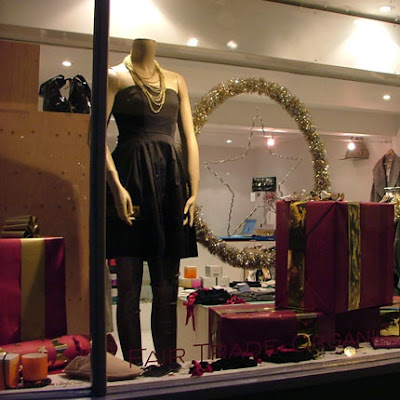
Equa's Christmas Windows

The festive season is upon us and at Equa we have put two of our favourite party outfits in the window to celebrate.

Pictured above is Annie Greenabelle's organic cotton Prom Dress in black accessorised with a Chain Necklace by Pippa Small for Made and Silver Leggings by Noir. It's all about the sparkle!


Keeping the metallic theme here we have the Bronze Hobo Dress in a hemp silk mix by Julia Smith teamed with organic cotton jersey Ski Pants by Annie Greenabelle. Also just seen is a the Brass Link Bracelet by Made.

Thursday, 23 October 2008

Your Wardrobe's Water Footprint

We hear a lot about our carbon footprint and the need to reduce it, but do you ever think about your water footprint?

On the Water Footprint Network (WFN) website you can calculate your individual water footprint. The links between domestic water use and the size of your footprint are fairly obvious but I found the section on virtual water use particularly thought provoking. The virtual water content of a product refers to the sum of all the fresh water required to produce it. Along its various stages of production one cotton shirt for example requires approximately 2,700 litres of water to produce (See the WFN product gallery for more details). The effects of this consumption are felt most keenly in the areas where the cotton is grown, often in semi arid conditions in developing countries. The consequences of intensive irrigation can be disastrous. In Uzbekistan drawing water for irrigation from rivers that feed the Aral Sea caused it to loose 60% of its area and 80% of its volume between 1960 and 2000 (See The water footprint of cotton consumption).

This highlights to me the importance of choosing less 'thirsty' materials such as hemp and utilising recycled fabrics. Or in the case of cotton going for organic cotton. Organic cotton is preferable to conventionally grown cotton for several reasons. Fertilizers, pesticides, and insecticides all require water to dilute them. Moreover the crop rotation system used in organic farming allows the soil to have better water retention due to increased organic matter in the soil. In addition precious water supplies are less likely to become contaminated from run-off of agricultural chemicals used in the cotton fields.


From left to right: Recycled Parachute Dress by Debbie Little, Hemp/Silk Hobo Dress by Julia Smith, Organic Cotton Rennie Jeans by Ruby.

Tuesday, 26 August 2008

August Outfit of the Month

It’s sale time so this month you get two outfits for the price of one!

Outfit 1

Cropped Silver Linen Jacket by Alchemist. I think this piece is really cool and I’m surprised there are any left! Here it is teamed with jeans but it also looks great over feminine summer dresses.


Zeitgeist Tee by Edun. This 100% organic cotton tee comes in cream and black. It has sleeves that roll back and are fixed with mini printed epaulettes. We've had customers who bought this in one colour and loved it so much they came back for the other.


Vera Jeans by Ruby. These sexy hot pink jeans are 98% organic cotton and 2% elastin. They are best worn tight fitting but the stretch in the fabric makes them really comfortable. They are high rise, coming up to the top of the hip bone, so they look superb with tees tucked in.


Outfit 2

Prism Tunic by Edun. Made from a lovely light silk/cotton mix, this top has a subtle stripe running through the weave. It comes in black or pale pink with black trim. It can be worn loose but it looks very chic cinched in with the Alchemist Wide Patent Leather Belt.


Jackie Pants by Wildlifeworks. A classic cropped trouser. They have beautiful detailing with double darts leading down to the back pockets. 100 % Organic Cotton.